本文目录 ⌄
where
如果我们想根据某个条件来查询,可以这样写:
 <select id="queryPersonByTag" resultType="Person">
        -- 这里的id是传进来的参数,MyBatis只能传递一个参数
        select * from Person
        <where>
            <if test="id">
               and id=#{id}
            </if>
            <if test="name">
               and name=#{name}
            </if>
        </where>

   </select>
如果第一个标签为null,where标签会自动去除开头的And
举例
我们只根据name查询
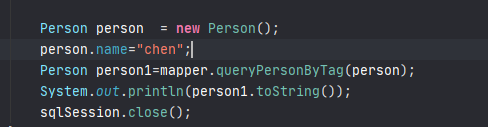
结果
Person{id=3, name=’Chen’, age=20}
只根据id查询
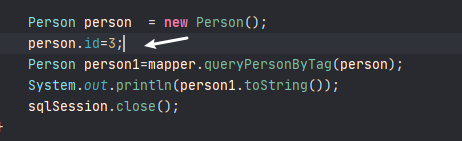
可以看出通过动态SQL,我们实现了一个SQL语句完成多种情况的查询。
For each
迭代属性
我们想通过属性来进行多个查询。
首先创建一个类,在类中设定一个ArrayList,在这里我们通过list属性中的数值来进行查询。
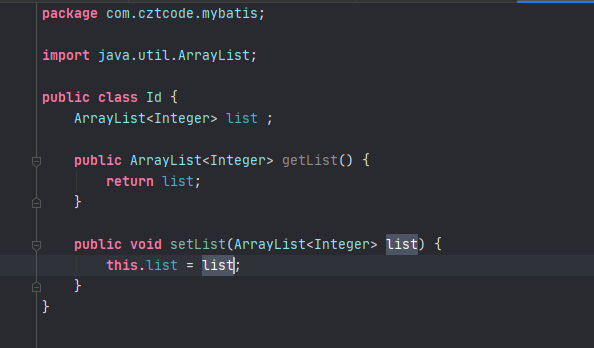
然后我们写SQL语句,首先写Mapper。返回值是多个,所以使用List。
List<Person> queryPersonById(Id id);在XML文件中这样定义
 <select id="queryPersonById" resultType="com.cztcode.mybatis.Person">
        select * from Person
        <if test="list!=null and list.size>0">
            <foreach collection="list" open=" where id in (" close=")" item="item" separator=",">
                #{item}
            </foreach>
        </if>
    </select>
foreach元素的属性主要有 item,index,collection,open,separator,close。
- item表示集合中每一个元素进行迭代时的别名,
- index指 定一个名字,用于表示在迭代过程中,每次迭代到的位置,
- open表示该语句以什么开始,
- separator表示在每次进行迭代之间以什么符号作为分隔 符,
- close表示以什么结束。
在使用foreach的时候最关键的也是最容易出错的就是collection属性,该属性是必须指定的,但是在不同情况 下,该属性的值是不一样的,主要有一下3种情况:
- 如果传入的是单参数且参数类型是一个List的时候,collection属性值为list
- 如果传入的是单参数且参数类型是一个array数组的时候,collection的属性值为array
- 如果是属性,则collection是属性名
迭代List
我们只需更改collection为list,并更改Mapper传递的参数即可
List<Person> queryPersonById(ArrayList<Integer> id);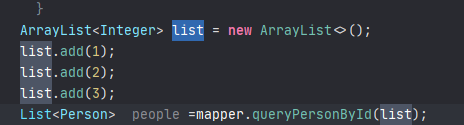
使用Array同理。
使用sql片段
感觉没必要。
定义形式

使用形式

返回布尔值类型
0时为false,大于等于1时为true
 <select id="queryExistByName" resultType="java.lang.Boolean">
        <![CDATA[ select count(id) from jd_user where `name`=#{name} ]]>
  </select>
利用Set去重
匿名函数
Dart基础之类型定义(typedef)
在Dart 中,函数跟 string 和 number 一样都是对象。类型定义或函数类型别名,为函数类型提供了一个名称,你可以在声明字段和返回类型的时候使用该名称。 当将函数类型分配给变量时,typedef会保留类型的信息。
下面的代码没使用类型定义:
class SortedCollection {
  Function compare;

  SortedCollection(int f(Object a, Object b)) {
    compare = f;
  }
}

// 初始化,伪实现
int sort(Object a, Object b) => 0;

void main() {
  SortedCollection coll = SortedCollection(sort);

  // 我们都知道 compare 是一个函数
  // 那到底是什么类型的函数?
  assert(coll.compare is Function);
}
复制代码在给compage赋值f时,类型的信息丢失了。 f的类型是(Object, Object)->int(->表示返回), 然而compare的是函数类型。 如果我们将代码更改为使用显式名称并保留类型信息,那么开发人员和工具都可以使用该信息。
typedef Compare = int Function(Object a, Object b);

class SortedCollection {
  Compare compare;

  SortedCollection(this.compare);
}

int sort(Object a, Object b) => 0;

void main() {
  SortedCollection coll = SortedCollection(sort);
  assert(coll.compare is Function);
  assert(coll.compare is Compare);
}
复制代码因为typedef只是简单的别名,所以它们提供了一种检查任何函数类型的方法。例如:
typedef Compare<T> = int Function(T a, T b);

int sort(int a, int b) => a - b;

void main() {
  assert(sort is Compare<int>); // True!
}